

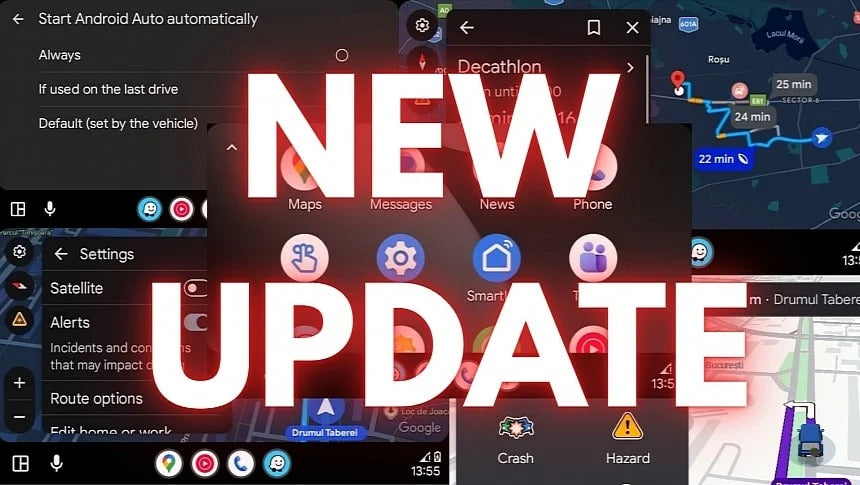
Google has officially rolled out Android Auto version 15.9, which is expected to be the last Android Auto update of the year. With just days left before 2026, this release appears to focus on stability and groundwork rather than visible new features—but what Google is preparing behind the scenes could make next year a major turning point for in-car infotainment.
At TheCarPlayer.com, we closely follow Android Auto and Apple CarPlay developments, as both ecosystems continue to shape how drivers interact with their vehicles. Here’s what you need to know about Android Auto 15.9 and what’s coming next.
Android Auto 15.9: Availability and Installation
Android Auto updates are distributed via the Google Play Store using a staged rollout. This means:
-
Only a small percentage of users receive the update immediately
-
Wider availability follows over the next several weeks
-
Devices with automatic updates enabled will install it silently
If you prefer not to wait, Android Auto 15.9 can be installed manually using the APK installer. The new version installs over the existing one, so uninstalling is not required.
Importantly, Google skipped the beta channel for this build, meaning 15.9 is a production-ready release designed for everyday users—not testers.

No Changelog, No Visual Changes—But That’s Not the Point
Google has not published an official changelog for Android Auto 15.9, and early testing confirms that no front-end or interface changes are immediately noticeable.
However, this type of release typically includes:
-
Bug fixes and background optimizations
-
Improved connection stability
-
Preparations for upcoming feature rollouts
If you’ve been experiencing issues such as random disconnects, slow startup times, or inconsistent app behavior, installing Android Auto 15.9 may help deliver a more refined experience.
What’s Coming to Android Auto in 2026?
While 15.9 is a quiet update, Google is actively developing major new features that are expected to roll out in 2026.
1. Widgets Are Making a Comeback
One of the most anticipated features currently in testing is widget support.
Android Auto previously supported widgets before the 2019 interface redesign (pre-Coolwalk). At the time, widgets such as weather and calendar appeared directly on the home screen. This functionality was later removed and reduced to small status bar indicators.
Now, widgets are returning—but in a new form.
Google is experimenting with a layout that places widgets alongside the main interface, similar to Android smartphones. This differs from Apple CarPlay’s approach, where widgets live on a separate, dedicated screen introduced with iOS 26.
While this design could feel cramped on displays smaller than 9 inches, it’s still under active development, and Google may refine the layout before release.
Currently tested widgets include:
-
Weather
-
Calendar
Google is also expected to enable third-party widget support, potentially allowing most Android phone widgets to appear in Android Auto.
2. Gemini AI Integration: Replacing Google Assistant
Another major upgrade already rolling out—though still limited in availability—is Gemini AI integration.
Gemini is Google’s next-generation AI assistant and is set to replace Google Assistant across all platforms, including Android Auto.
Key capabilities include:
-
Natural, conversational voice commands
-
No need to repeat wake phrases for every request
-
Advanced search capabilities
-
Access to Google Maps business listings and reviews
-
Smarter destination and route suggestions
For drivers, this means a more intuitive experience behind the wheel, where commands can be spoken naturally instead of memorizing rigid phrases.

Smarter Hazard Reporting in Google Maps and Waze
Gemini also enhances hazard reporting, a feature introduced in Android Auto during 2024.
Drivers can simply describe what they see on the road—such as debris, accidents, or stopped vehicles—and Gemini interprets the request automatically. This same concept powers Conversational Reporting, which is also rolling out in Waze.
The result is safer, hands-free reporting that minimizes distraction.
Why This Matters for CarPlay Users Too
At TheCarPlayer.com, we frequently point out that Apple CarPlay continues to lead in consistency, simplicity, and OEM-independent support—especially for drivers upgrading older vehicles.
Apple already introduced:
-
Widget support with iOS 26
-
Tight ecosystem integration
-
Broad vehicle compatibility through retrofit CarPlay modules
Many drivers choose CarPlay retrofit solutions to avoid waiting years for factory software updates—something Android Auto users still depend on heavily.

Final Thoughts: Android Auto 15.9 Is a Foundation Update
Android Auto 15.9 may not look exciting on the surface, but it plays an important role:
-
It stabilizes the platform
-
Prepares devices for major 2026 features
-
Reduces the likelihood of bugs thanks to skipping beta
If everything stays on schedule, Q1 2026 could bring widgets, Gemini-powered AI, and a significantly smarter Android Auto experience.
For drivers who want immediate access to modern infotainment features—without waiting on manufacturers—Apple CarPlay retrofits remain the fastest and most reliable upgrade path.
Stay tuned to TheCarPlayer.com for the latest updates on CarPlay, Android Auto, and premium retrofit solutions for modern vehicles.
Share:
Google Maps Rival Reverses Course: Sygic Brings CarPlay and Android Auto Back to Lifetime Users
Google Quietly Working on a New Android Auto Eye-Candy Feature